“TikTok made me buy it.”
“I found it on Reels.”
When you ask your buddy where they got that portable blender, you might expect one of the replies above. Whether found in their feed or through a quick search, your friend was connected with products/brands that resonated with them. As a brand, cracking this code of algorithmic visibility is dependent on two things:
- People genuinely enjoying your content (watching, sharing, engaging, etc.)
- Algorithms understanding what your post is about (AKA social SEO)
Platforms like YouTube, Instagram, TikTok, Facebook, and X have also morphed into search engines with billions of their own daily searches. Ignoring SEO for your social media means losing visibility, authority building opportunities, and audience reach.
We’ll cover the whys and the hows of social media SEO, so you can stay at the top of the feed and social search results. Skip to a section if that suits your fancy:
Why Does Social SEO Matter in 2026?
We’ve known for years that search engines use social signals (mentions, engagement, cross-platform presence) as authority indicators, boosting discoverability. Now, we’re finding AI models are leveraging social signals for their citations.
Optimized social profiles with consistent branding, keywords, and strategic links also generate referral traffic and trust signals.
There is also urgency. As in content creator educator Modern Mille’s 2026 social media trends video, she predicted the rise of algorithm resets based on the Instagram recommendations reset and TikTok For You feed reset features. An algorithm reset means your posts will have to work harder to be recommended in feeds and search results. Whether or not more social platforms offer resets, you still need your posts and account to act like a labeled folder on your laptop or a filing cabinet (whichever metaphor you prefer). Social SEO gives your post/account a clear label so the algorithm can show your content to interested users.
How Do You Implement Social SEO?
Believe it or not, implementing social SEO can be simple ((with the right know-how and tools)). When a concept for a post is conceived, relevant keywords should also be taken into account. Free tools like Google Keyword Planner and Microsoft Keyword Planner can help you gauge popularity via average search volume. AI tools like ChatGPT and Perplexity can help you brainstorm keyword variations. Also, be sure to do a quick search of that keyword in the respective social platforms to see what comes up. You want to make sure that keywords are being used with the right connotation/context.
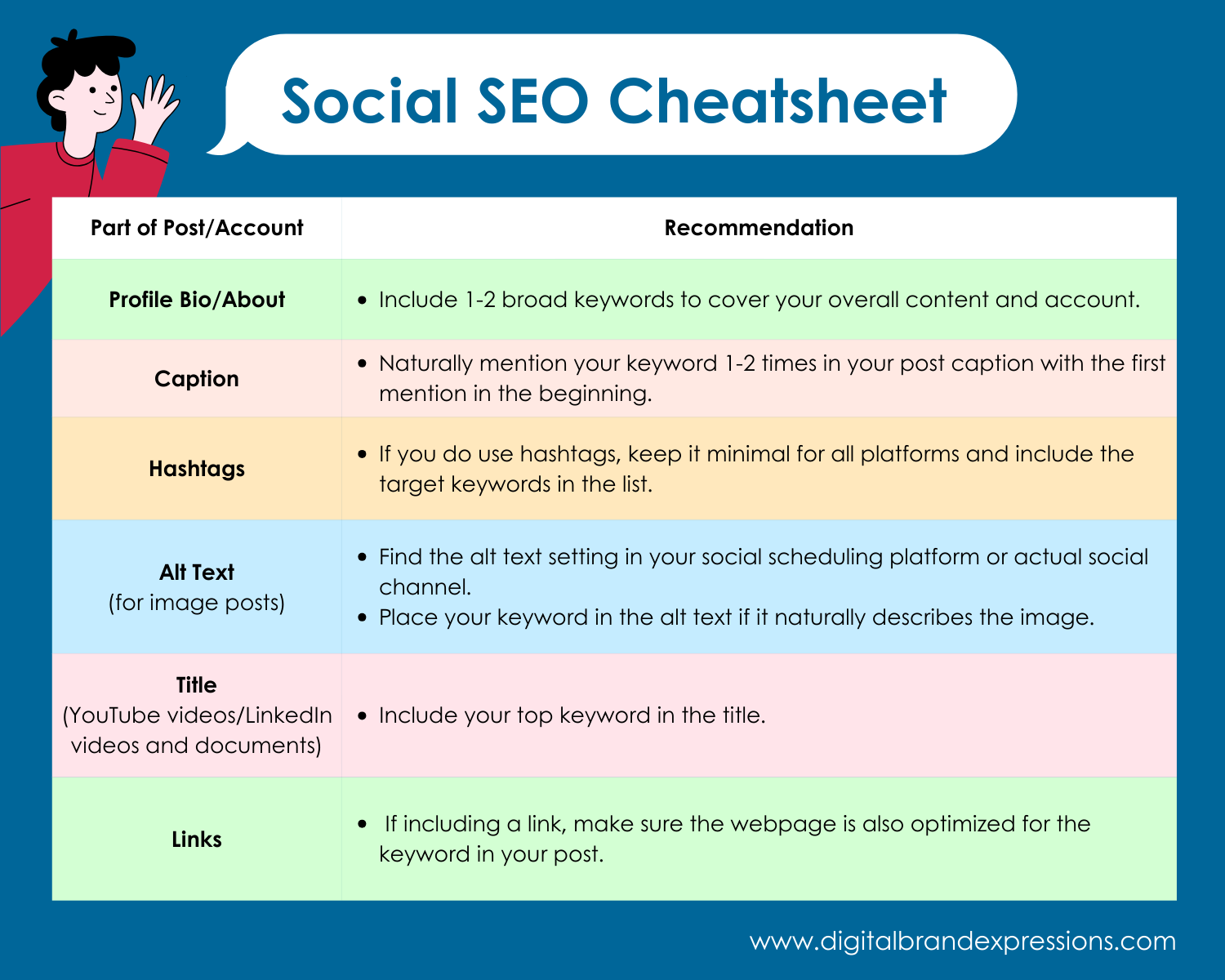
Now that you have targeted your one or two very closely related keywords (i.e., tips for singers, singing tips), you want to include them in the following parts of your post. Make sure the keyword mentions are natural and not forced. (Keyword stuffing will not fool anyone.):
- Profile Bio/About: Make sure your profile includes the top keywords that describe the content and account overall. These 1-2 keywords will most likely be broader than the keywords on your posts as it needs to cover your overall content. It needs to be mentioned naturally without seeming forced.
- Caption: Mention your keyword 1-2 times in your post caption with the first mention in the beginning. Again, you want to keep your caption natural, so include the keyword where it is relevant. No one wants to read a caption like (*clears throat*) “My grey hiking beanie is my favorite part of my closet. I love to wear my grey hiking beanie when I hike because my grey hiking beanie is fun.” The rules of good content creation always apply. Social SEO is an added sprinkle on top.
- Hashtags: Hashtags were once used to categorize content, but algorithms are much smarter now, categorizing content on their own. Whether you still believe in them, they are still being used in some cases (discover those hashtag use cases here). If you do use hashtags, keep it minimal for all platforms and include the target keywords in the list!
- Alt Text: Not only an accessibility standard, alt text can also be used for social media SEO. Some social scheduling platforms (like Sprout Social and Hootsuite) allow you to do this in the scheduling process. If you don’t use those, you can find the alt text setting in the actual social platforms, as well. Be cautious of staying relevant though. You should describe what is in the image in or under the platform character limit.
- Title: Some platforms like YouTube and LinkedIn allow you to title videos (YouTube & LinkedIn) and carousel documents (LinkedIn only). Include your top keyword here as well!
- Links: If you are including a link, make sure the webpage is also optimized for the keyword in your post, this will further cement your brand’s authority across the web.
- Want more on YouTube SEO? We have a whole section on that!
Here are a few more hot tips for you:
- TikTok can parse on-screen text, audio, and spoken words, so be sure to integrate your keyword in your video scripts.
- X hates excessive hashtag usage. Just don’t do it.
- Stay consistent with messaging across platforms to reinforce your brand authority.
- When repurposing content for multiple social platforms, you may need to slightly vary your optimization strategy based on the available areas to optimize. I.e., on LinkedIn, you can add a title to your carousel document, but Instagram does not allow that (as of now).
How Do You Implement YouTube SEO Optimization?
Ah, welcome to our YouTube SEO section. You see YouTube videos embedded into Google search results and used in citations on AI platforms, so it’s a great place to build visibility. The TubeBuddy Chrome extension is a great place to do competitive YouTube keyword research.
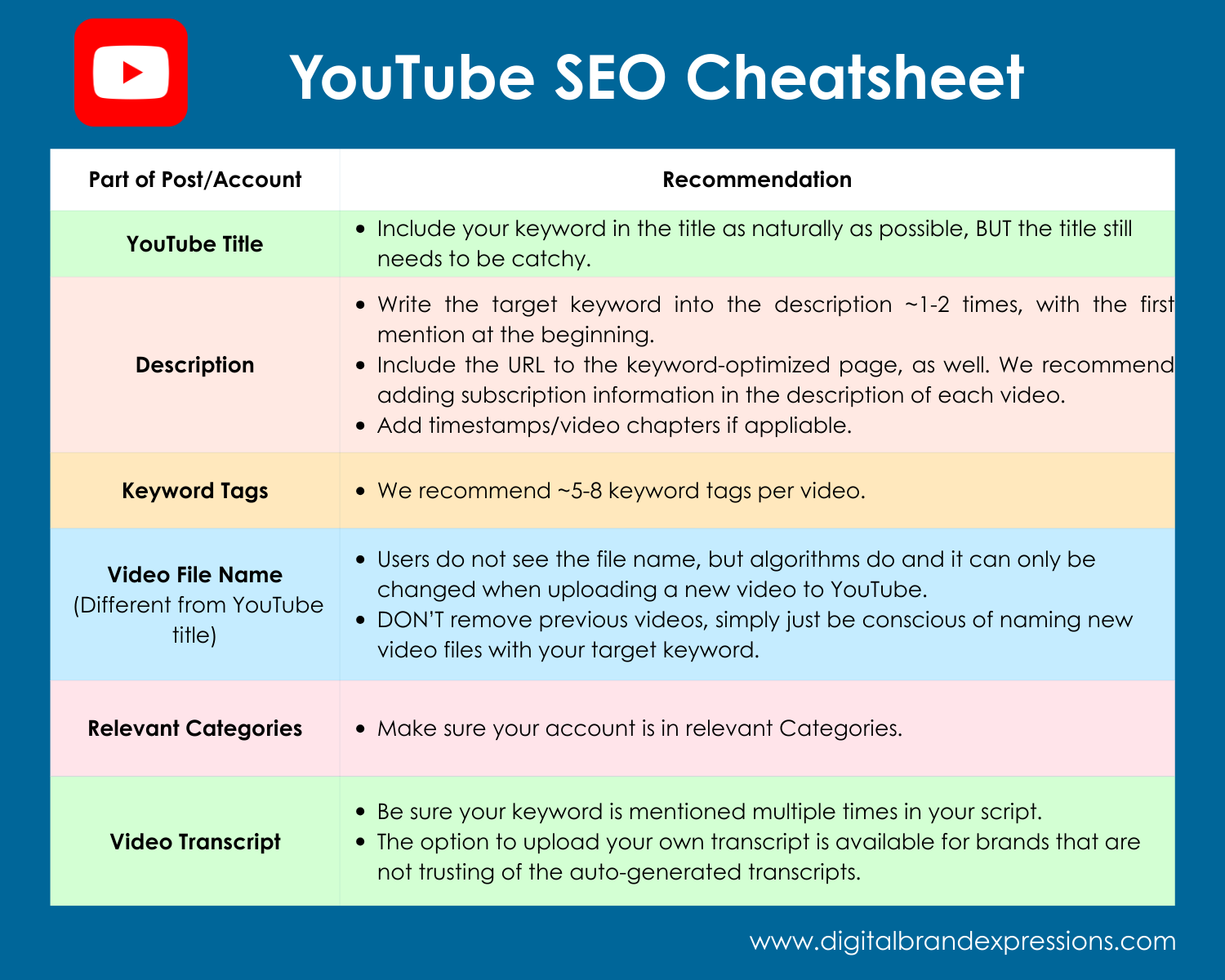
Like all social platforms, your content quality matters, but social SEO helps people find good content. YouTube’s structure for videos provides more opportunities for keyword optimization beyond the bio and hashtags components mentioned above. Here are the optimizable elements to provide consistent alignment for your target keyword(s):
- YouTube Title: Diving further into this, yes, you should include your keyword in the title as naturally as possible, BUT the title still needs to be catchy. (Watch this awesome video on creating better YouTube Titles to learn more.)
- Description: Write the target keyword into the description ~1-2 times, with the first mention at the beginning (again, be natural). Include the URL to the keyword-optimized page, as well. We recommend adding subscription information in the description of each video. If it makes sense, include timestamps/video chapters on important parts of the video. You need at least 3 timestamps for them to work in the description.
- Keyword Tags: We recommend ~5-8 keyword tags per video.
- Video File Name: THIS IS DIFFERENT FROM THE YOUTUBE TITLE. Users do not see the file name, but algorithms do and it can only be changed when uploading a new video to YouTube. DON’T remove previous videos, simply just be conscious of naming new video files with your target keyword.
- Relevant Categories: If not done already, make sure your account is in relevant Categories. Easy instructions are in this YouTube Short.
- Video Transcript: Most platforms will autogenerate these for you. Be sure your keyword is mentioned multiple times in your script. The option to upload your own transcript is available for brands that are not trusting of the auto-generated transcripts.
How Do You Measure Social SEO Impact?
Track the performance of your new SEO-optimized posts through your normal social KPIs and measure visibility (impressions/reach) over time. Then, every 3-6 months, perform a social SEO audit to ensure links, profiles, and metadata are aligned with brand goals.
Remember that social SEO helps with post/profile findability, but great content makes people stay. Explore the ways to give your audience value, entertain them, or both!
Happy optimizing!